
L
LABRADORITE
Name: Named after the Labrador Peninsula in eastern Canada, where it first officially identified by Moravian missionaries in 1770.
Chemical Formula: (Ca,Na)(Al,Si)4O8 (A calcium-enriched plagioclase feldspar)
AKA: Rainbow Moonstone (white labradorite typically with blue adularescence); Specularite (trade name for labradorite with strong, distinctive color flashes in shades of orange, yellow, green, purple, blue, pink, red). Stone of Transformation.
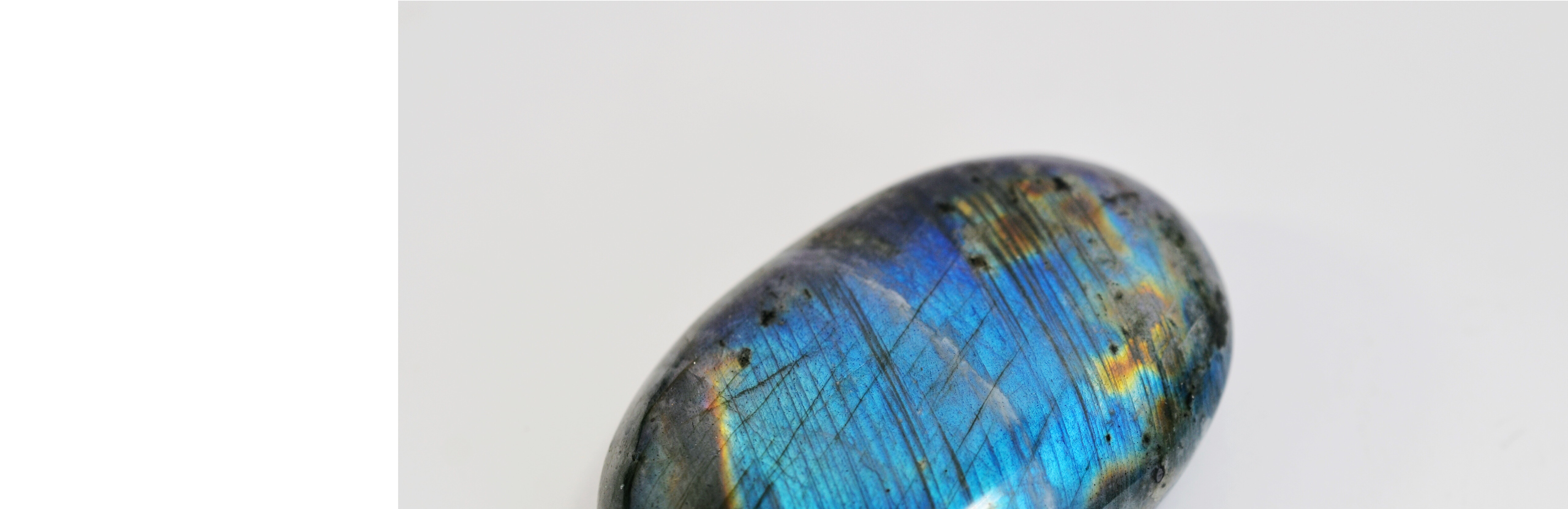
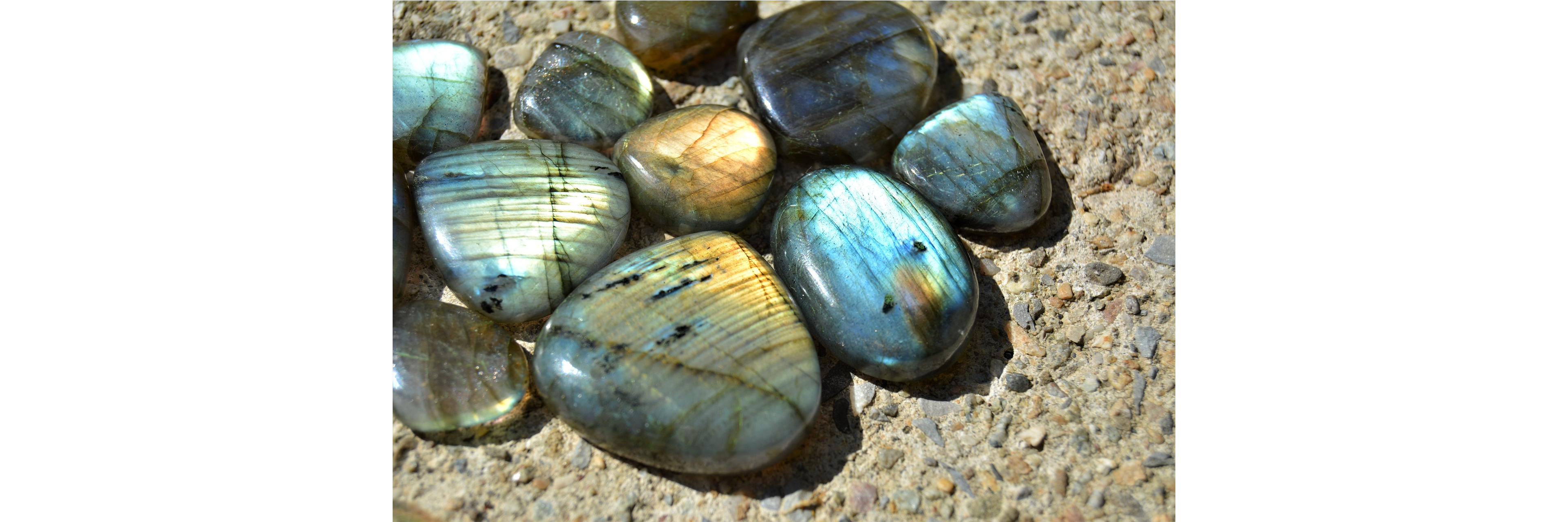
Description: a dark opaque feldspar with labradorescence (typically bright blue, green, yellow, orange, purple).
Group: Feldspar.
Varieties: Oregon Sunstone; Rainbow Moonstone. Spectrolite (trade name for a labradorite from Finland with strong, distinctive color flashes). Galaxyite (micro-labradorite crystals in feldspar).
Color: a dark opaque feldspar with labradorescence (typically bright blue, green, yellow, orange, purple). The base color is usually a dark, smoky gray, black, or grayish-green. The iridescent “flash” (labradorescence) displays vibrant metallic blues, greens, gold, oranges, and occasionally rare purples or reds. When it holds all the colors of a rainbow it is known as Spectrolite.
Treatments: Usually untreated. Occasionally, it may be surface-treated with a clear resin or wax to fill any tiny surface fissures and improve luster.
Moh’s Hardness: 6 to 6.5. (relatively durable but brittle and prone to scratching or cracking if hit along its cleavage planes)
Toughness: Poor to Fair.
Location Found: Canada (Labrador; Newfoundland); Finland; Madagascar; Norway; Russia; and the United States of America (Oregon, Utah).
Birthstone: June; February; March.
Wedding Anniversaries: NA.
Zodiac Signs: Aquarius, Capricorn, Gemini, Leo, Pisces, Sagittarius, Scorpio.
Chakra Associations: Third Eye, Throat, Crown.
Historical Associations: awakening; protection; mysticism; initiation; sight; shield; explore and enhance intuition; diviners; dreamers; inner alchemy; shamans; intuitive; protection during visionary work; shapeshifting rituals; aurora borealis; light; insight; aura protection; sealing energy leaks; psychic abilities; clairvoyance; banish fears and insecurities; strengthen faith in the self; reveal the truth behind illusions.
Historically Used to Treat: brain disorders; digestive disorders; eye disorders; high blood pressure; metabolic issues; sensitivity to cold..
Care: Require special care as they can be easily cleaved (split) and chipped. Never use ultrasonic or steam cleaners as the vibrations and heat can cause the stone to delaminate (split along its layers). Use lukewarm, soapy water and a soft cloth. Avoid exposure to hairspray, perfumes, and household chemicals, which can dull the surface. Store it separately in a fabric lined box. Because it has a “perfect cleavage” in two directions, it can shatter if struck at the wrong angle.
Imitations: Glass or plastic imitations exist but usually look flat and lack the depth of the natural stone’s internal flash.
Synthetics: There are no commercial synthetic versions of Labradorite on the market.
LAPIS LAZULI
Name: The Latin word “lapis “meaning “stone” and the Persian “lazhuward” meaning “blue”. Up until the Middles Ages, lapis was called “sapphrius”, which also means “blue”.
AKA: Stone of Kings.
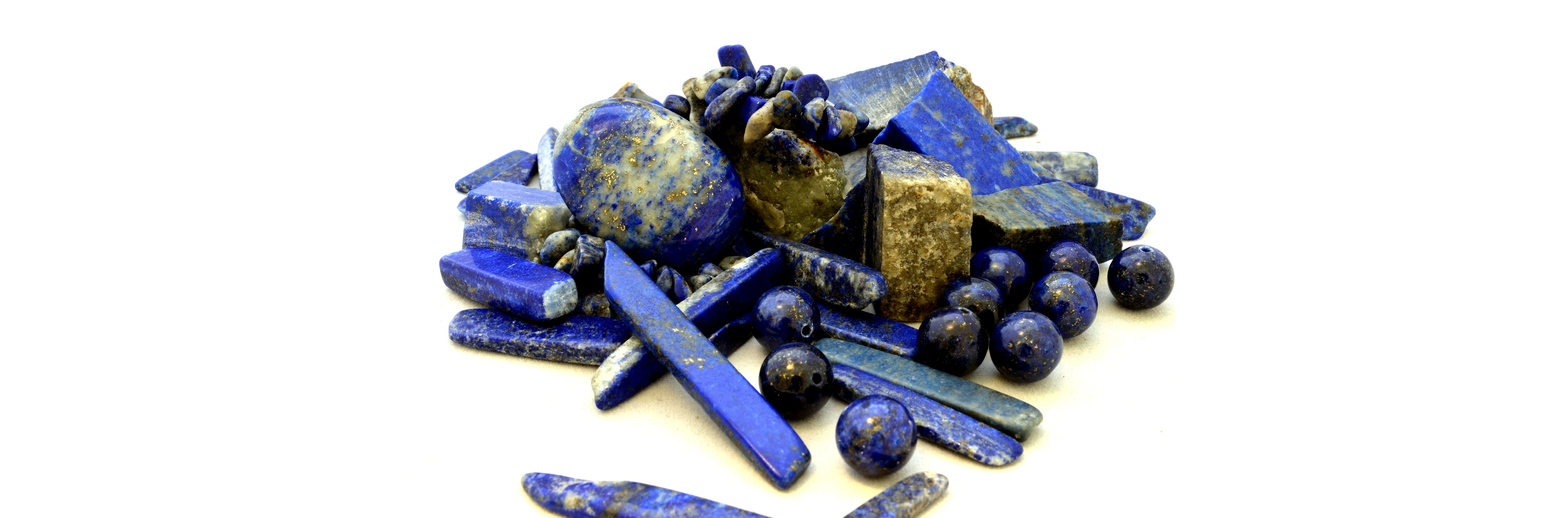
Color: It has a color range of a medium to dark greenish “navy” blue, pure “royal” blue, or violet-ish “midnight” blue. Depending on its source it can also have white calcite veining (which lowers it value), or golden-looking pyrite.
Composition: (Na,Ca)8(AlSiO4)6(S,Cl,SO4,OH)2, plus Calcite and Pyrite. A metamorphic rock composed of several different minerals, primarily of lazurite, calcite and pyrite.
Treatments: Dyeing is very common and improves color and hides white veining, but may fade or be affected by solvents. Coating or impregnation with oil, wax, or plastic to improve color, polish appearance, and seal any dye.
Moh’s hardness: 5 to 6.
Toughness: Fair.
Locations Found: Afghanistan (Sar-e-Sang, finest quality). Chile. Myanmar (Burma). Russia.
Birthstone: September; December.
Wedding Anniversaries: 7th, 9th.
Zodiac Signs: Aquarius, Cancer, Capricorn, Gemini, Libra, Pisces, Sagittarius, Taurus, Virgo.
Chakra Associations: Third Eye; Throat.
Historical Associations: Ensures help from Angels; chastity; sadness; protection from evil; honest communication; intuition; divine favor; prevent nightmares; calm a restless mind; total awareness; self-expression; inner truth; honesty; compassion; objectivity; clarity; truth sovereignty; sacred vision; ancient memory. Bonds relationships in love and friendship. Speak with authority. It calls in the wisdom of queens, prophet, and builders of sacred temples. Used to clear illusion, speak power, and walk in truth that echoes beyond the body. Integrates spiritual insight into physical form. It was also used as eye shadow and as funerary masks.
Historically Used to Treat: sadness; eye infections; depression throat health; thyroid balance; detoxification; migraines.
Care: Never steam clean. Ultrasonic cleaning is risky and best not to use. Clean with a damp cloth and plain water and dry immediately with a soft cloth. High heat can induce a green color or cause complete color loss. Some chemicals may damage or discolor the lapis lazuli. Extremely sensitive to acids. It is porous and can absorb perfumes, hairsprays, or soaps which will discolor the stone over time. Store away from harder stones as they will easily scratch the surface.
Imitations: Dyed howlite, dyed magnesite, plastic, and sodalite. German Lapis and Swiss Lapis are blue dyed jasper and not lapis lazuli.
Synthetics: Gilson Lapis, a high-quality lab-grown simulant; its composition differs slightly from the natural rock.
LARIMAR
Name: Coined in 1974 by Miguel Mendez, who combined his daughter’s name “Lari” (short for Larissa) with the Spanish word for sea, “Mar”.
AKA: Blue Pectolite. The Atlantis Stone.
Description: A rare, fibrous silicate that only forms in one small, mountain region in the world. It is celebrated for its tranquil, sea-foam and sky-blue hues that mimic sunlight dancing across shallow Caribbean waters.
Chemical Composition: Acid silicate hydrate of calcium and sodium / Blue Pectolite (NaCa2Si3O8OH)
Variety: of Pectolite.
Color: White, light blue, sky blue, deep blue, green-blue, and vivid “volcanic” blue. Color intensity is caused by copper replacing calcium within the mineral matrix.
Treatments: Generally untreated. Lower-grade porous pieces are occasionally stabilized with clear resin or polymer, but gem-grade Larimar is polished in its natural state.
Moh’s Hardness: 4.5 to 5.0
Toughness: Fair to Good.
Location Found: Exclusively found in one location, the Filipinas Mine in Los Chupaderos, Barahona Province, Dominican Republic.
Birthstone: February; January.
Wedding Anniversaries: 5th and 13th.
Zodiac Signs: Aquarius; Leo; Pisces; Taurus.
Chakra Associations: Heart; Third Eye; Throat.
Historical Associations: Atlantis; tranquility; clear communication; emotional equalizer; smooth out anger and resentment; peaceful dialogue; clarity; self-sabotage; victim mindset; speak truth; grace; confidence; excessive worry; fostering deep self-acceptance. Bridges logical thought with pure emotion.
Historically Used to Treat: vocal strain; throat inflammation; thyroid imbalances; high fevers; high blood pressure; panic attacks; skin rashes; hives; joint inflammation; stress; anxiety.
Care: Prolonged exposure to strong, direct sunlight can cause the blue color to fade over time into a pale white-gray. Never use an ultrasonic cleaner. Never use a steam cleaner. Avoid acidic cleaners, household chemicals, or prolonged soaking. Use lukewarm water, very mild soap, and a soft cloth to clean. Store it in a padded fabric pouch away from harder gemstones which can easily scratch its surface.
Imitations: Dyed Howlite; Dyed magnesite; Blue Slag Glass; Plastic/Resin; and Hemimorphite.
Synthetics: No commercial lab-grown Larimar.